
Taking Duchamp for a Spin
While Man Ray seemed to have spent his early years casting about, imitating the artists around him, until he finally found his own way, Duchamp never seemed lost because he never wanted to go anywhere. I wanted to go to the Duchamp exhibit at MoMA, and here I was.
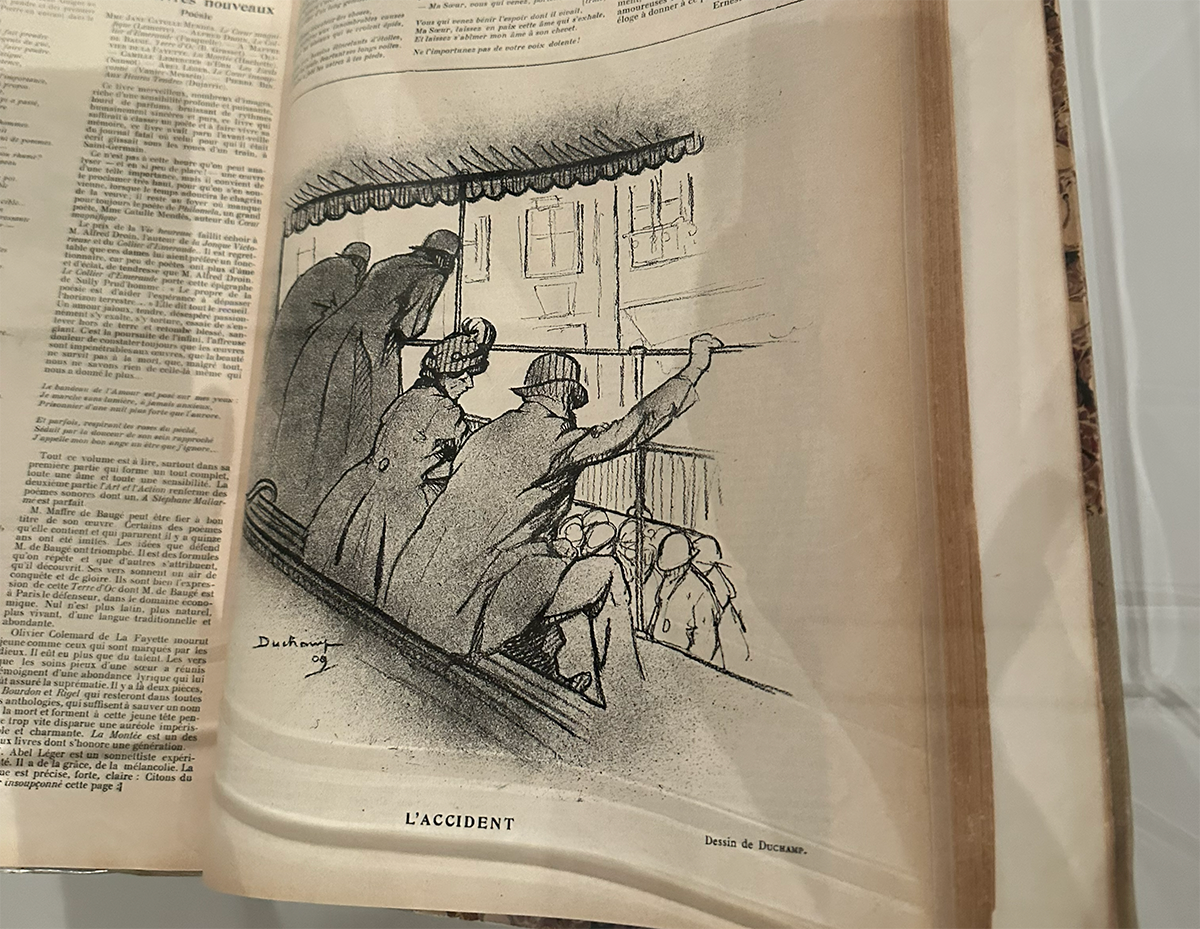
photo by Don Zirilli
In the first room, I saw his cartoons and illustrations. He understood the rhythm of lines, which would famously manifest in Nude Descending a Staircase No.2. But already I’m making it seem like he had an arc, like he was developing. But the difference between his minor and major work is only the difference in how other people responded to it. Duchamp was always playing at art, playing with art, and he had no reverence for his creations. Oh, you like Bride Stripped Bare by Her Bachelors? Here, I made a copy of it, no taller than an action figure. How much will you pay me for it? There was a whole room full of copies, and another room full of “box sets” of his greatest hits.
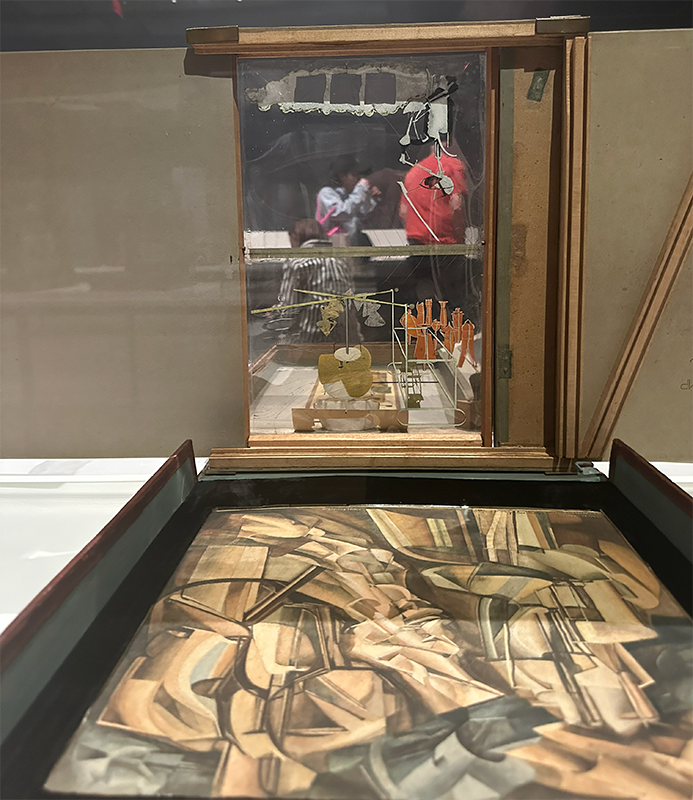
photo by Don Zirilli
And then of course I walked into a room with a urinal in the middle of it. People love to question whether “Fountain” is art, but it never was. There was no outraged audience in a gallery show of avant garde art. It never happened. “Fountain” was rejected by a committee that included Duchamp himself. He supposedly quit over this rejection and complained about it in a magazine that he was one of the publishers of. In other words, it was a scandal in which he played every part, more or less. Were we ever really supposed to muse over and stare at a urinal for longer than it took Duchamp to buy and scribble a name on it, which was not even his own name? The piece was (understandably) lost and never exhibited, but its replicas are endlessly displayed in museums, and always in the context of his fabricated controversy. Is it Art? How is it Art? Duchamp doesn’t care what your answers are. He lives in those questions.
Going from one room to another, one transgression to another, it occurred to me that Duchamp might be the freest person I had ever heard of. He delighted in crossing every boundary he came upon, like gender. He didn’t just sign works as Rrose Selavy. He posed for photographs! Speaking of photographs, he didn’t hesitate to discard representation in painting. Nor did he have my fear of being unfinished. Nothing is finished until it’s gone. He didn’t just send a nude down a staircase. He sent a sad old man, chess pieces, chess players, and God knows what else. He worked on and worked over ideas again and again, with no goal in mind, like evolution or the three stooges. This inspired me, I felt like the process of making art was all that mattered.
But Duchamp wasn’t done. With his readymades, he discarded process, too. Sometimes he would “create” nothing but a set of instructions for a local artist or gallerist to follow. What is left of art, or the artist? You can declare that questioning art is art, but as an artist, and as a poet, where does that leave me?
I walked into the room of optical disks, twirling with mesmeric patterns, and almost immediately started spinning myself. Or at least my head did. I had this strange feeling that Duchamp was threatening to possess me if I stayed much longer. And would that be so bad? After all, if my role as an artist is to question art, to be a joker, why not be the original instead of a pale imitation?
Surely I would be a joker, a fool, if I gave Duchamp the last word on art. Perhaps I was thinking wrongly about “process.” Surely the most important process is the process of experiencing art. Like any artist, Duchamp found his own way to create an experience, and instead of thinking he somehow deconstructed art, I should appreciate the experience he put me through, however dizzying.
So I left the exhibit before an exorcism was required. I must make do without Duchamp’s identity, but that’s ok. After all, Duchamp often did.
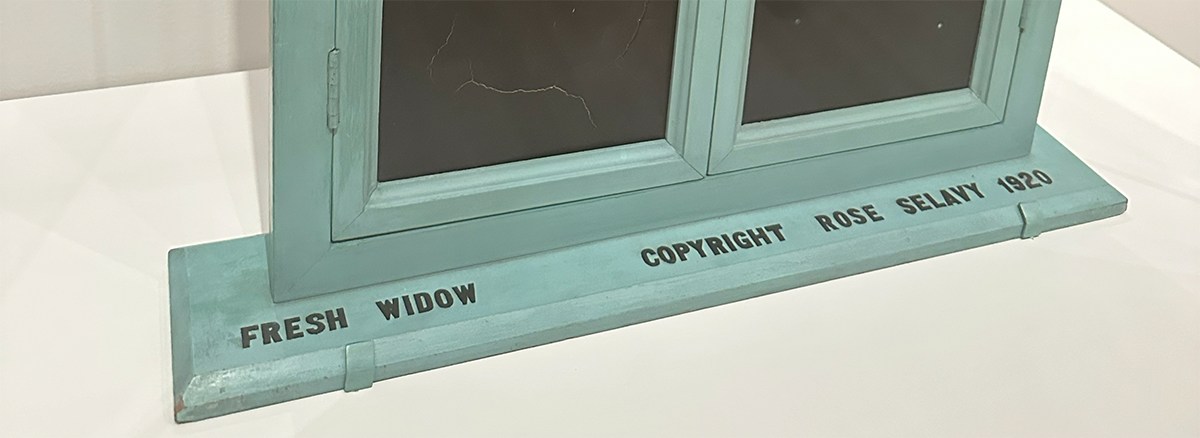
photo by Don Zirilli